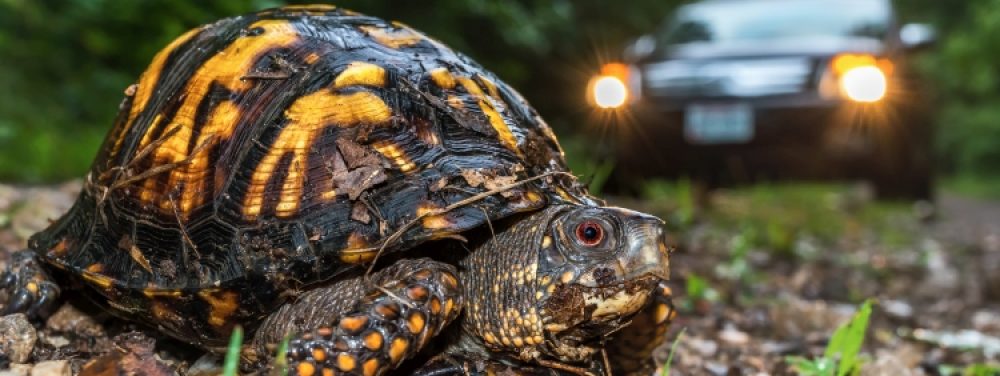
Systematic Conservation Planning (SCP) is aimed at providing decision-support for choices between alternative conservation and environmental management scenarios. Initially developed for protected area sitting by optimizing outcomes for biodiversity, SCP has evolved to allow for economic and social factors to be explicitly addressed, thus providing highlighting tradeoffs between conservation goals and economic development goals. We primarily use algorithms in software Zonation (University of Helsinki), but there are other SCP platforms (e.g., Marxan, C-Plan).
Trade-offs between renewable energy development and species conservation in British Columbia
Renewable energy sources are being promoted at a the global level to mitigate the effects of climate change and to meet increasing human demand for energy and food, despite a poor understanding in some cases of their potential ecological consequences. I collaborate with Dr. Wendy Palen at Simon Fraser University, BC Canada, and the public utility company BC Hydro on a spatial decision-support tool for prioritizing energy – environment land allocation in British Columbia. Our work feeds into the Britih Columbia long-term planning for renewable development via the Integrated Resource Plan 2025.
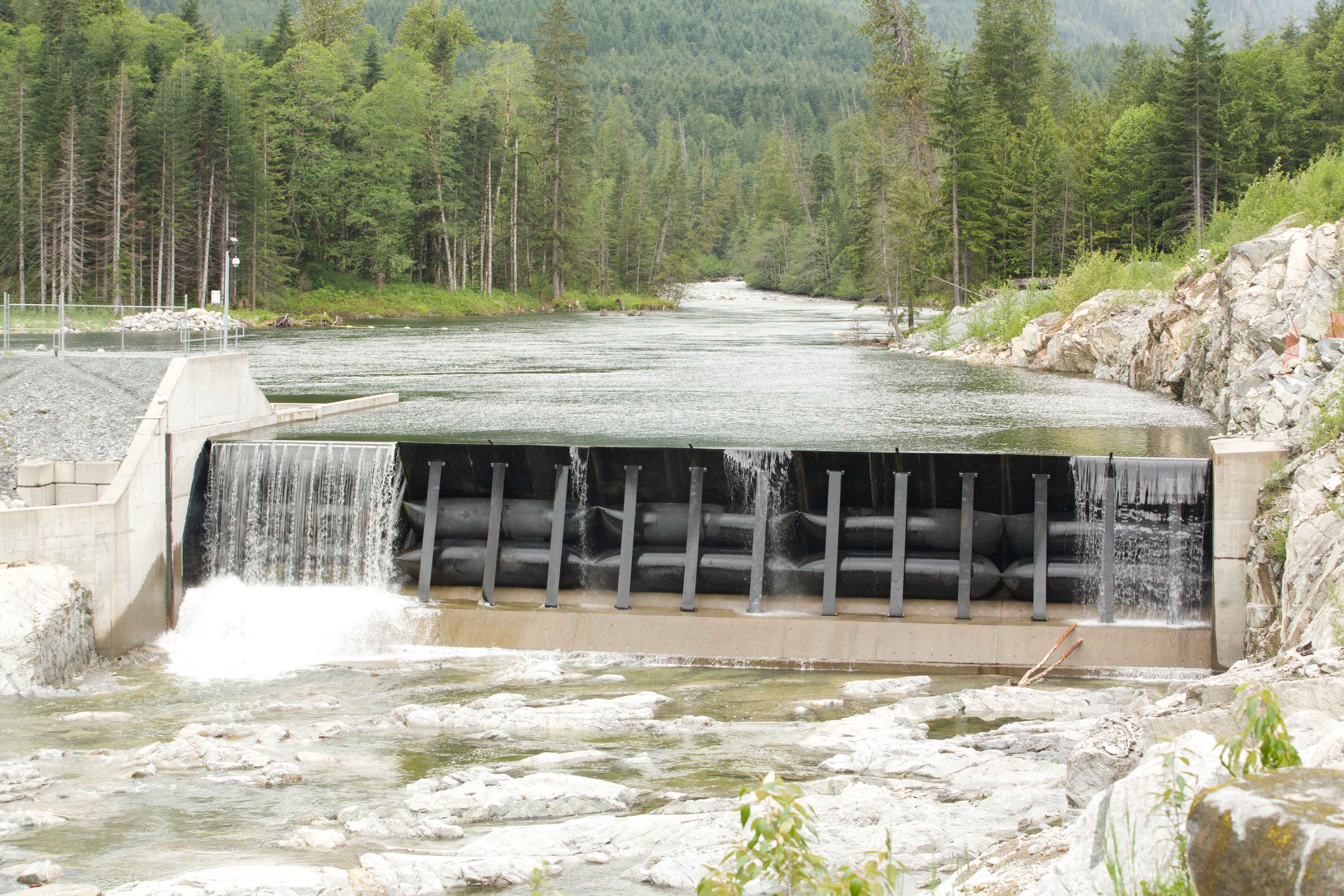
Individual renewable energy are considered to have only modest ecological footprints, but widespread implementation of such projects has the potential to generate substantial cumulative effects in both aquatic and terrestrial environments. The primary challenge for conservation is the lack of a framework that simultaneously evaluates cumulative impacts on aquatic and terrestrial species and ecosystems, in the context of alternative development scenarios. This approach integrates the economics of power production (costs, revenue, power capacity), and the physical impacts of small projects on species and ecosystems, and identify win-win situations for biodiversity conservation and renewable energy, as well as potential conflicts.
Funding: David H. Smith Conservation Research Fellowship (class of 2012), Gordon and Betty Moore Foundation, Wilburforce Foundation, BC Hydro, NSERC
Products:
- Souther, S., M. Tingley, V.D. Popescu, D. Hayman, T. Graves, M. Ryan, B. Hartl and K. Terrell (2014) Biotic impacts of energy development from shale: Research priorities and knowledge gaps. Frontiers in Ecology and Environment 12(6):330-338 [media coverage: The Guardian (goo.gl/FAZT0y), Vancouver Sun (goo.gl/79Ju4o), NPR]
- Popescu, V.D., R. Munshaw, N. Shackelford, F. Montesino-Pouzols, W.J. Palen, E. Dubman, P. Gibeau, M. Horne, and A. Moilanen (2020) Quantifying biodiversity trade-offs in the face of widespread renewable and unconventional energy development. Scientific Reports 10(1): 7603
Identifying species and ecosystem conservation priorities in Romania
This work is lead by Dr. Iulia Miu and PhD student Marian Mirea (University of Bucharest), in colaboration with Dr. Laurentiu Rozylowicz, with the goal to evaluate efficacy of the current protected area network for conserving biodiversity in Romania, and identify conservation priorities for mammals, birds, reptiles, amphibians, insects and plants across multiple spatial scales.
We collaborate with University of Bucharest, Romanian Environmental Protection Agency, Romanian National Protected Areas Agency and local NGOs on a large (3 million EUR) project on saproxylic beetle conservation in the Carpathians: LIFE ROsalia.

Funding: Romanian NSF, EU LIFE Nature Programme
Products:
- Mirea, M.D., I.V. Miu, V.D. Popescu, B.S. Brodie, S. Chiriac and L. Rozylowicz (2024) Priority conservation areas for protected saproxylic beetles in Romania under current and future climate scenarios. Biodiversity and Conservation 33: 2949–2973 link
- Geue, J., P.J. Rotter, C. Gross, Z. Benko, I. Kovacs, C. Fantana, V.D. Popescu and H.A. Thomassen (2022) Bird species and habitat types have limited use as reciprocal surrogates and are inconsistently represented in the current Natura 2000 network in Romania. PLOS ONE 17(2): e0251950 link
- Miu, I., L. Rozylowicz, V.D. Popescu and P. Anastasiu (2020) Identification of areas of very high biodiversity value to achieve the EU Biodiversity Strategy for 2030 key commitments. PeerJ 8: e10067 link
- Miu, I., G. Chisamera, V.D. Popescu, R. Iosif, A. Nita, S. Manolache, V.D. Gavril, I. Cobzaru and L. Rozylowicz (2018) Conservation priorities for terrestrial mammals in Dobrogea Region, Romania. Zookeys 792: 133-158
 The BEAST Lab