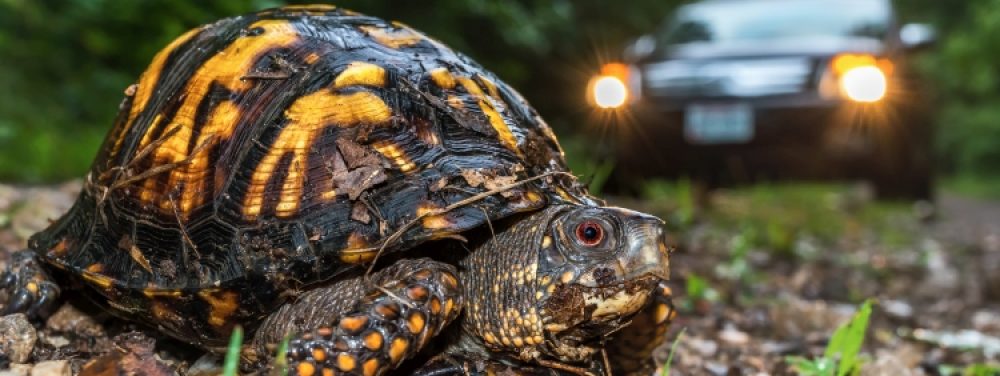
We collaborate with wildlife managers, environmental NGOs and other organizations on a wide range of applied mammalian ecology and conservation topics. This work ranges from understanding basic ecology and population parameters of wildlife populations to evaluating the effects of habitat fragmentation and overexploitation on population dynamics and developing monitoring protocols for detecting population trends.
Romanian Large Mammal Conservation
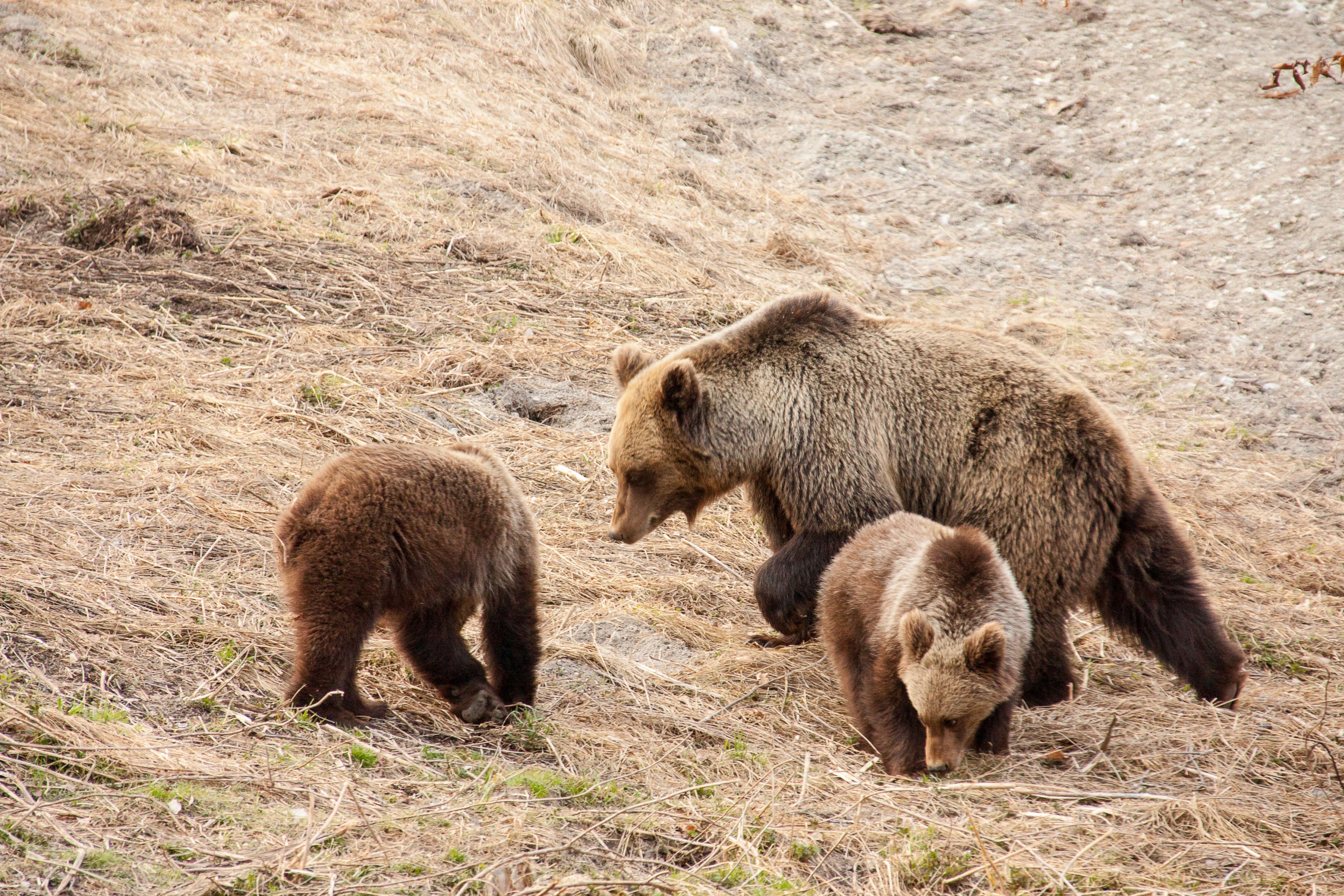
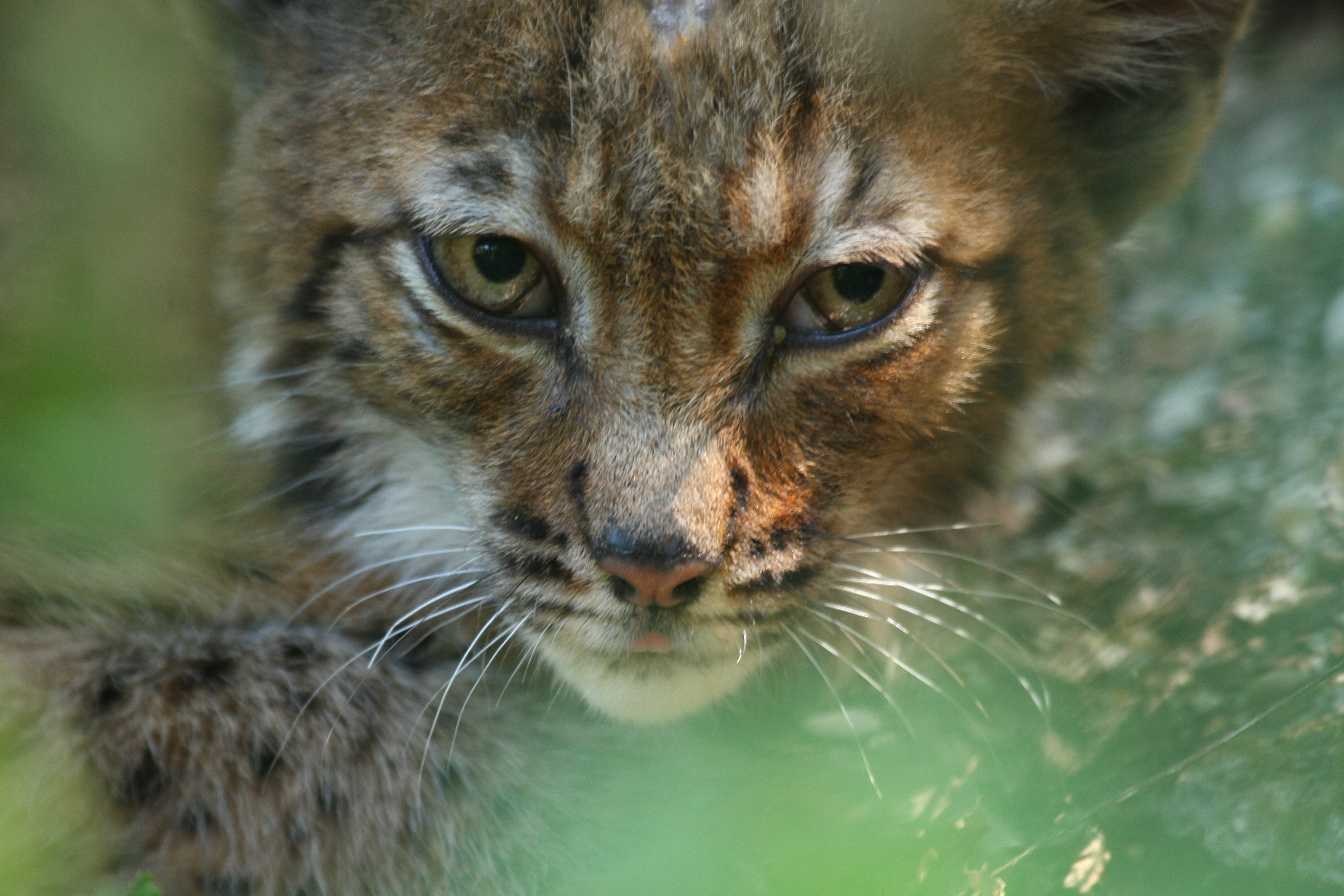
Romania hosts a significant proportion of the European carnivore populations (brown bear, Eurasian lynx, gray wolf), and their conservation status in Romania influences the European-level conservation strategies. For brown bears, hunting represents a major source of contention between the regulatory agencies and ENGOs, stemming from a less-than rigorous approach to estimating abundances (which hunting quotas rely on). We work with Romanian academics, NGOs and EPAs to develop monitoring protocols for large carnivores.

Funding: Romanian NSF, European Commission LIFE NATURE Programme
Products:
- Pop, M.I., S.R. Gradinaru, V.D. Popescu, D. Haase, C.I. Iojă (2023) Emergency-line calls as an indicator to assess human-wildlife interaction in urban areas. Ecosphere 14: e4418 link
- Pop, M.I., M. Dyck, S. Chiriac, L. Berde, S. Szabo, C. Ioja and V.D. Popescu (2023) Predictors of brown bear predation events in the Romanian Carpathians. Conservation Science and Practice link
- Dyck, M., R. Iosif, B. Promberger, C. Promberger, and V.D. Popescu (2022) Dracula’s menagerie: A multispecies occupancy analysis of lynx, wildcat, and wolf in the Romanian Carpathians. Ecology and Evolution 12: e8921 link
- Iosif, R., V.D. Popescu, M. Dyck*, and B. Promberger (2022) Estimating Eurasian lynx (Lynx lynx) density using camera traps in the Romanian Carpathians. Journal of Mammalogy 103: 415-424 link
- Popescu, V.D., M.I. Pop, and L. Rozylowicz (2021) Trophy hunting undermines public trust. Science 372: 1049 LP – 1049 download pdf
- Iosif, R., M. I. Pop*, L. Rozylowicz , S. Chiriac, R. M. Sandu, L. Berde, S. Szabó, V.D. Popescu (2020) Den structure and selection of denning habitat by brown bears in the Romanian Carpathians. Ursus 31e5: 1-13 link
- Treves, A., Santiago-Ávila, F.J., Popescu, V.D., Paquet, P.C., Lynn, W.S., Darimont, C.T., Artelle, K.A. (2019) Trophy hunting: Insufficient evidence. Science 366: 435 link
- Popescu, V.D, M.I. Pop, S. Chiriac, and L. Rozylowicz (2019) Romanian large carnivores at a crossroads. Science 364 (6445): 1041
- Pop, M.I., I. Ruben, I.V. Miu, S. Chiriac, L. Rozylowicz, and V.D. Popescu (2018) Combining resource selection functions and home range to identify conservation priority habitats for brown bears. Animal Conservation 21: 352-362
- Pop., M., L. Bereczky, S. Chiriac, R. Iosif, A. Nita, V.D. Popescu, and L. Rozylowicz (2018) Movement ecology of brown bears (Ursus arctos) in the Romanian Eastern Carpathians. Nature Conservation 26: 15-31
- Popescu, V.D., R. Iosif, M. Pop, S. Chiriac, G. Bouros, and B.J. Furnas. (2017) Integrating sign surveys and home range data for estimating brown bear (Ursus arctos) density in the Romanian Carpathians. Ecology and Evolution 7: 7134-7144
- Popescu, V.D., Artelle, K., M. Pop, S. Manolache, and L. Rozylowicz (2016) Assessing biological realism of wildlife population estimates in data-poor systems. Journal of Applied Ecology 53(4): 1248-1259
Occupancy-Based Biodiversity Monitoring Methods
Current rates of biodiversity declines require rapid biodiversity assessments to aid the development of monitoring programs. Capitalizing on community-level analytical occupancy methods that account for imperfect detection, we are currently working with colleagues from the Kunming Institute of Zoology (China) and several UK universities on statistical developments for analyzing large environmental DNA metagenomic datasets as snapshot biodiversity surveysin China’s protected areas and Panda Reserves. We are using a variety of environmental DNA samplers, such as terrestrial leeches, water and air.

Funding: China NSF, Chinese Academy of Sciences, Harvard Global Fund
Products:
- Ji, Y., A. Diana, X. Li, E. Matechou, D.W. Yu and V.D. Popescu (in prep) High quality, granular, timely, trustworthy, and efficient vertebrate species distribution data across a 30,000 sqkm protected area complex. for Nature Communications
- Wang, Y., Z. Liu, V.D. Popescu, Z. Ding, G-D Wang, C. Yang (in review) Comparative Efficiency of Multiple eDNA Sampling Methods for Monitoring Vertebrate Diversity in Mountainous Region. Environmental DNA
- Ji, Y., C.C.M. Baker, V.D. Popescu, J. Wang, C. Wu, Z. Wang, Y. Li, L. Wang, C. Hua, C. Yang, C.C.Y. Xu*, Q. Wen, N.E. Pierce, and D.W. Yu (2022) Measuring protected-area effectiveness using vertebrate distributions from leech iDNA. Nature Communications 13(1): 1555 link
In the past, we worked with the de Valpine Lab at University of California Berkeley and the Peery Lab at University of Wisconsin, Madison (funded by US Forest Service grant) on evaluating the power of acoustic monitoring program for (1) detecting changes in territory occupancy due to fire-suppression forestry treatments, and (2) detecting long-term trends in territory occupancy by California Spotted Owl. We combined occupancy modeling with BACI designs to inform the US Forest service on the best strategies to implement an acoustic-based monitoring protocol in terms of number of sites, and number of annual revisits to detect population changes.
Funding: US Forest Service
Products:
- Wood, C., V. D. Popescu, H. Klinck, J. Keane, R. J. Gutierrez, S. Sawyer, F. Atuo, and M. Z. Peery (2019) Detecting small population changes at landscape scales: A bioacoustic-site occupancy framework. Ecological Indicators 98: 492-507
- Popescu, V.D., P. de Valpine, D. Tempel, and M.Z. Peery (2012) Estimating population impacts via dynamic occupancy analysis of Before-After Control-Impact studies. Ecological Applications 22: 1389-1404.
Bobcat Ecology and Population Dynamics
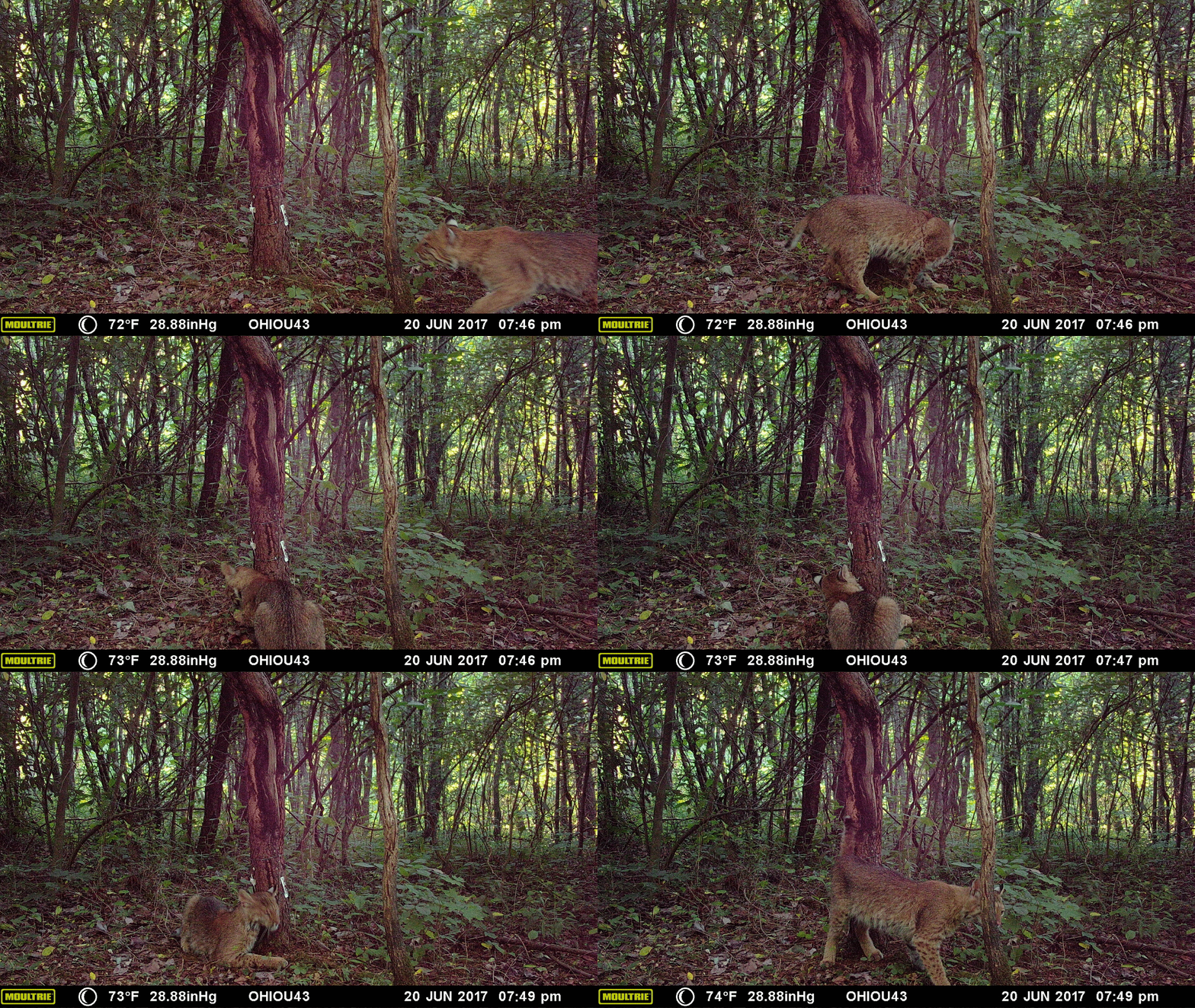
We worked with Ohio Department of Natural Resources on bobcat ecology and interspecific interactions between bobcats and coyotes in the US Midwest. We developed a population model for Ohio’s recovering bobcat population to aid management and conservation. For this work, we integrated multiple types of data (camera trap, environmental DNA, roadkill locations, necropsies and citizen observations to develop a Population Viability Analysis investigating the sustainability of a potential trapping season in Ohio.
With collaborators from Purdue University and Ohio University (and funding from Indiana DNR), we are evaluating diet overlap between bobcats and coyotes in Ohio and Indiana and the contribution of Midwestern carnivores to ecosystem services and disservices.
Funding: Ohio Department of Natural Resources, Indiana Department of Natural Resources, Ohio University
Products:
- Dyck, M., G. Uhrig, S. Spear, R. Iosif, and V.D. Popescu (2024) First density estimates for a recovering bobcat population in southeast Ohio using DNA from scat. Population Ecology 66: 294-307 link
- Dyck, M., K.T. Shoemaker, C.A. Dennison, and V.D. Popescu (2023) Simulated effects of roadkill and harvest on the viability of a recovering bobcat population. The Journal of Wildlife Management e22460 link
- Dyck., M., E. Wyza, and V.D. Popescu (2022) When carnivores collide: a review of competitive interactions between bobcats (Lynx rufus) and coyotes (Canis latrans). Mammal Review 52: 52-66 link
- Popescu, V.D., M. Kenyon, R. Brown, M. Dyck, S. Prange, W. Peterman and C. Dennison (2021) Habitat connectivity and resource selection in an expanding US Midwest bobcat population. PeerJ 9: e12460 link
- Bencin, H., C. Rose, S. Prange and V.D. Popescu (2019) Roadkill and space use data predict vehicle-strike hotspots and mortality rates in a recovering bobcat (Lynx rufus) population. Scientific Reports 9: 15391
- Rich, M., C. Thompson, S. Prange, and V.D. Popescu (2018) Relative importance of habitat characteristics and interspecific interactions in determining terrestrial carnivore occurrence. Frontiers in Ecology and Evolution 6:78
Presentation to OH Division of Wildlife (Sep 2021) below
Pacific Fisher Ecology and Management
West Coast Pacific Fishers (Pekania pennanti) are considered for listing under the Endangered Species Act. With several small disjunct populations remaining, considerable efforts are being put into investigating causes of declines and understanding population and spatial dynamics. We worked with the de Valpine Lab and wildlife biologist Rick Sweitzer at UC Berkeley within the Sierra Nevada Adaptive Management Project to gain insights into Pacific Fisher population status in the Sierra National Forest.

Funding: US Forest Service
Products:
- Popescu, V.D., P. de Valpine and R. Sweitzer (2014) Testing the consistency of wildlife data types before combining them: the case of camera traps and telemetry. Ecology and Evolution 4(7):933-943
- Sweitzer, R., V.D. Popescu, K.L. Purcell, C.M. Thompson, and R.H. Barrett (2015) Population size, density, and demography of fishers (Pekania pennanti) in the Sierra National Forest, California. Journal of Mammalogy 96(4): 772-790
- Sweitzer, R. A. , V. D. Popescu, R. H. Barrett, C. M. Thompson, K. L. Purcell, G.M. Wengert, M.W. Gabriel, and L.W. Woods (2016) Mortality risks and limits to population growth of Fishers in California. Journal of Wildlife Management 80: 438-451
White-Tailed Deer Road Ecology
Mitigation of deer-vehicle collisions in the Nelsonville Bypass of US Highway 33; we worked with the Ohio Dept of Transportation and the Environmental Studies Program at the Voinovich School of Leadership and Public Affairs at Ohio University to monitor deer movements and the efficacy of road mortality mitigation structures using remote cameras and pellet count surveys

Funding: Ohio Department of Transportation
Products:
- Sperry, B.R., V.D. Popescu, E. Wyza, S. Porter, R. Wiley, D. Cottrill, and D. McAvoy (2023) Assessment of deer-vehicle crash mitigation structures on the U.S. 33 Nelsonville Bypass. Journal of Transportation Engineering, Part A: Systems 149: 05023004-1 link
 The BEAST Lab