
Our research in this area strives to advance our understanding of the relative roles of behavior and eco-physiology on shaping individual and population-level responses to multiple stressors, and the carryover effects of impacts of multiple stressors throughout the complex amphibian lifecycle (in a climate-change context). We focus on two study systems: Eastern Helbender salamanders and vernal pool breeding amphibians (with American Wood Frogs as a model organism).
Developing monitoring tools for Eastern Hellbender conservation
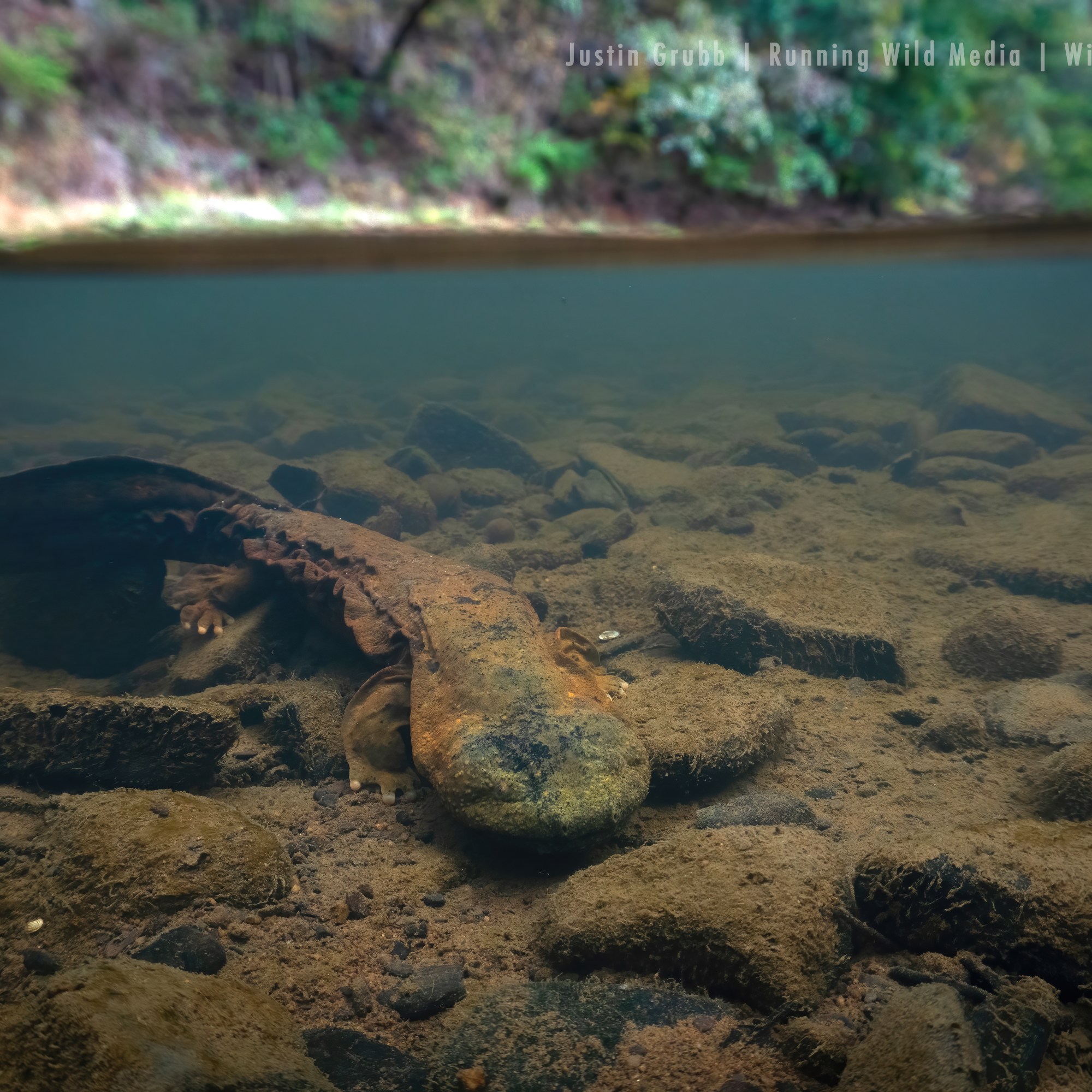
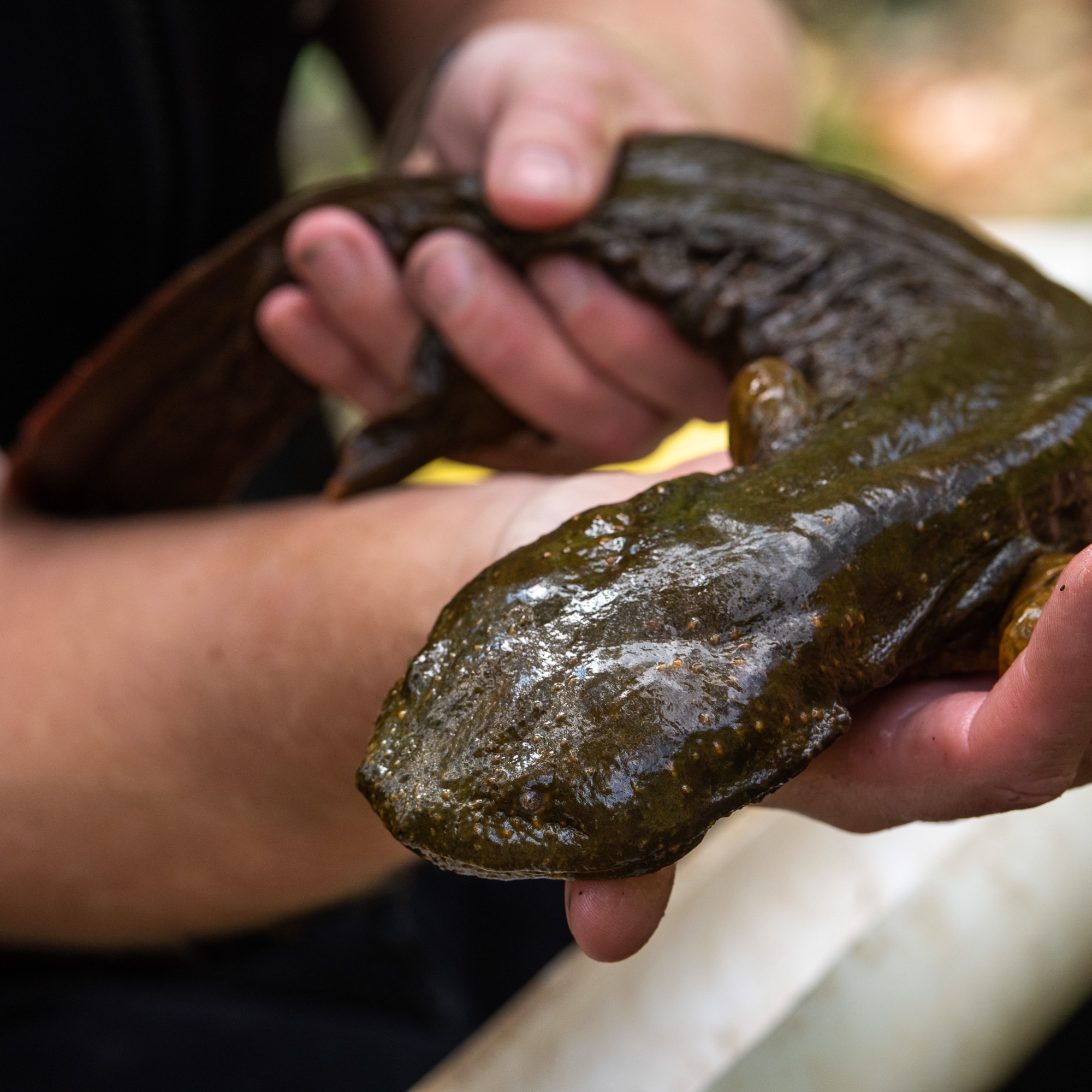
The goal of this work is to evaluate the effectiveness of current conservation strategies (head-starting), and to develop new monitoring methods to evaluate population dynamics and nesting behavior. We work with Dr. Matt Kaunert (Lycoming College) in Western Pennsylvania on a long-term demography and ecology monitoring project involving 400+ concrete artificial nest boxes. We are collecting field mark-recapture data, paternal reproductive ecology and behavior via nest video monitoring and use simulations and population models to guide translocation and reintroduction programs.
We are also taking an experimental approach to understand limiting factors to hellbender reproduction with a dfcosuc on the effects of elevated water conductivity on early life stages (egg and early larval stages).

Funding: Ohio Department of Natural Resources, Ohio University Research Committee (OURC), Muskingum Watershed Conservancy District
Products:
- Brown, R., M. D. D. Kaunert, K. Johnson, W. Roosenburg and V.D. Popescu (accepted) Assessing the effects of conductivity on egg development and survival of Eastern Hellbenders (Cryptobranchus a. alleganiensis). Scientific Reports
- Kaunert, M.D.D., R.K. Brown, S.F. Spear, P.B. Johantgen, V.D. Popescu (2023) Restoring eastern hellbender (Cryptobranchus a. alleganiensis) populations through translocation of headstarted individuals. Population Ecology 66 93-107 link
- Matt Kaunert research overview: VIDEO
- Award-winning documentary HELLBENT involving our Pennsylvania research: VIDEO
Carryover effects of aquatic stressors in Wood Frogs
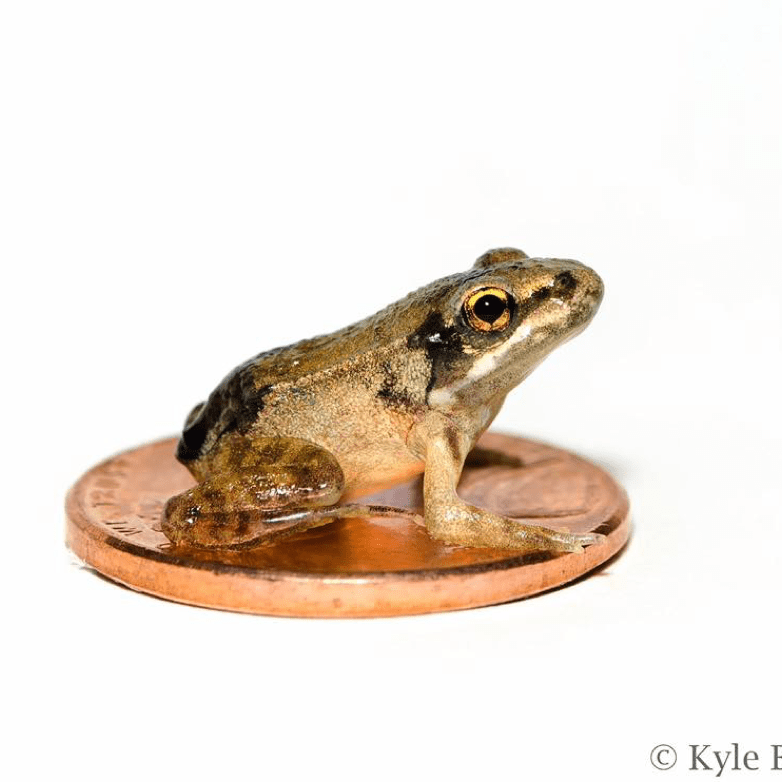
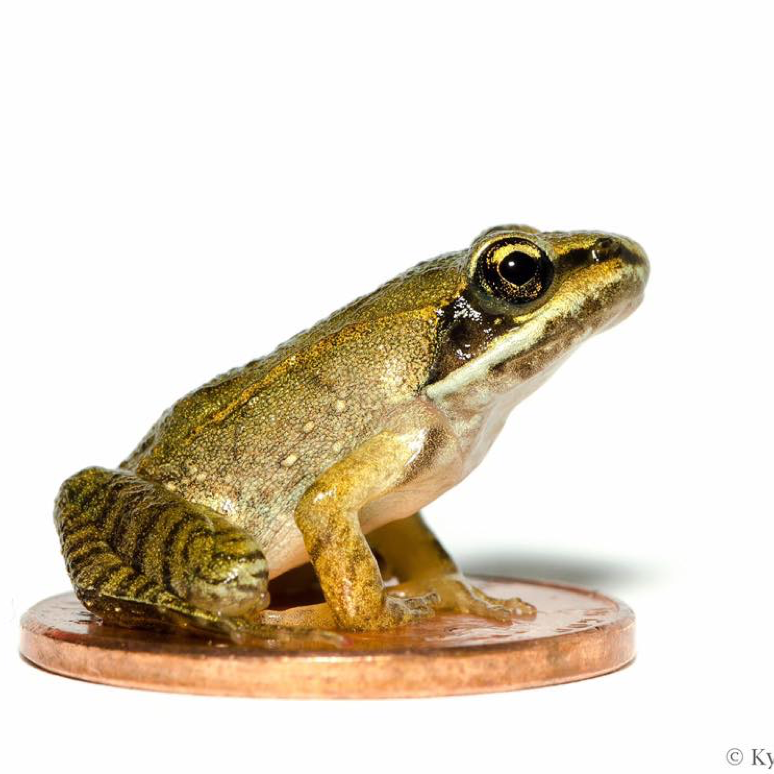
Our research in this area is experimental and investigates the carryover effects of climate change-induced hydroperiod, natural predators and neonic pesticides on wood frogs using a combination cattletank mesocosms and field experiments. We assess development, growth and survival of larval wood frogs exposed to various stressors and evaluate the indirect, sub-lethal effects on growth, fitness, behavior and survival of juveniles in the terrestrial environment using common-garden terrestrial mesocosm experiments and endurance trials. The goal is to integrate vital rates into spatial models of future distribution and population viability using land use, climate, and hydrology projections for the next century.

Funding: NSF – Graduate Research Fellowship Program, Ohio University 1804 Fund
Project outputs:
- Thompson, C., M.R. Sweeney, and V.D. Popescu (2022) Carryover effects of sublethal exposure to pesticide Imidacloprid and shortened hydroperiod on juvenile wood frog (Lithobates sylvaticus) fitness and behavior. Journal of Zoology 317: 229-240 link
- Earl, J.E., S.M. Blomquist, E.B. Harper, D.J. Hocking, M.L. Hunter, Jr., J.R. Johnson, M.S. Osbourn, D.A. Patrick, V.D. Popescu, T.A.G. Rittenhouse, and B. Rothermel (2022) Amphibian biomass export from geographically isolated wetlands: temporal variability, species composition, and potential implications for terrestrial ecosystems. Diversity 14(3): 163 link
- Thompson, C.M. and V.D. Popescu (2021) Hydro-period induced carryover responses for survival, growth, and endurance of a pond-breeding amphibian. Oecologia 195: 1071–1081 link
- Sweeney, M.R., C. Thompson, and V.D. Popescu (2021) Sub-lethal exposure to neonicotinoid pesticide Imidacloprid induces behavioral changes in larval wood frogs (Lithobates sylvaticus). Environmental Toxicology and Chemistry 40: 1840-1849 link
 The BEAST Lab
Pingback: Vernal Pools, Part II - Young Naturalists Club
I would like to meet RYAN BROWN and help him with the Hellbender studies program. Please reach out to me. My name is TIM SMITH. I can be reached at 412-335-8580. I am very serious about helping to protect the Hellbenders. Please let ME help YOU PLEASE